
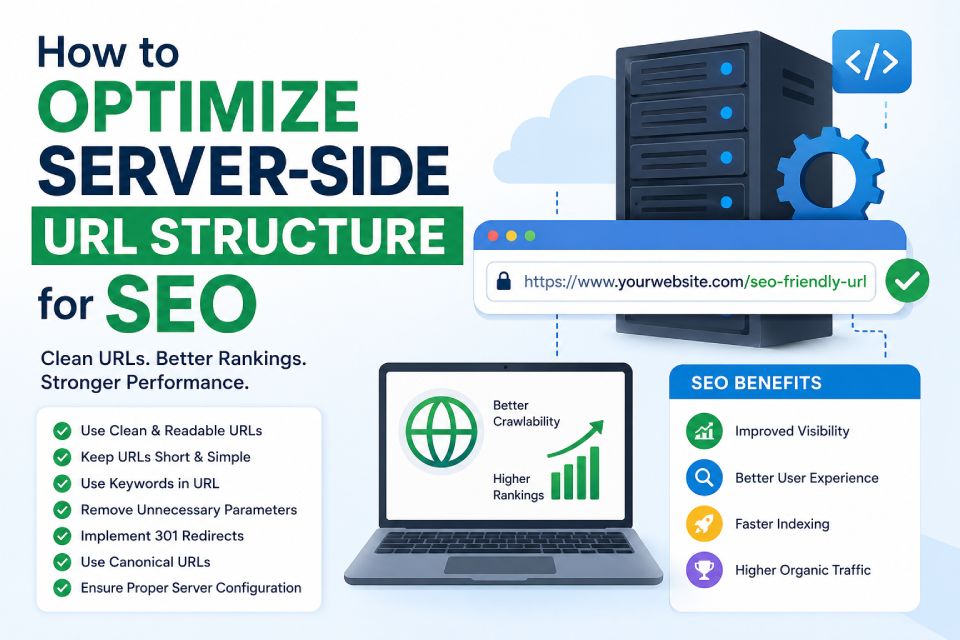
A well-designed website is not enough to rank on Google if your URL structure is confusing. While many website owners focus on keywords, backlinks, and page speed, they often ignore one of the most important technical SEO factors—server-side URL structure. Search engines and users both prefer URLs that are clean, descriptive, and easy to understand. A properly optimized URL not only improves crawlability but also increases user trust and click-through rates.
Whether you are running a WordPress blog, an eCommerce website, a news portal, or a custom PHP application, following the right URL structure can significantly improve your website’s SEO performance. Let’s understand how you can optimize your server-side URLs the right way.
Why URL Structure Matters for SEO?
Search engines use URLs to understand the hierarchy and relevance of a webpage. A meaningful URL gives Google additional context about the page before even reading its content. At the same time, users are more likely to click on URLs that clearly explain what they will find after opening the page.
Benefits of SEO-Friendly URLs
- Improves search engine crawling and indexing.
- Creates a better user experience.
- Increases click-through rate (CTR) from search results.
- Makes URLs easier to share on social media.
- Helps organize website content efficiently.
1. Keep URLs Clean and Readable
Avoid long URLs filled with random numbers, symbols, or unnecessary parameters. Instead, create URLs that clearly describe the page content. Visitors should understand the topic just by looking at the link.
❌ Poor Example
/page.php?id=4578&cat=12
✅ Better Example
/seo/server-side-url-optimization
2. Include Relevant Keywords Naturally
Adding your primary keyword in the URL helps search engines understand the page topic. However, avoid keyword stuffing. One relevant keyword is enough. Keep the URL short and meaningful rather than adding every possible search term.
3. Remove Unnecessary Parameters
Dynamic URLs containing session IDs, tracking parameters, or multiple query strings can create duplicate content issues. Whenever possible, use server-side URL rewriting techniques such as Apache .htaccess or Nginx rewrite rules to convert dynamic URLs into SEO-friendly static URLs.
4. Use Hyphens Instead of Underscores
Google treats hyphens as word separators, making URLs easier to read. Avoid using underscores or special characters in URLs. Stick with lowercase letters and hyphens for maximum compatibility and readability.
| Recommended | Avoid |
|---|---|
| seo-friendly-url | seo_friendly_url |
| best-hosting-guide | BestHostingGuide123 |
5. Configure Proper Redirects
If you change an existing URL, always use a 301 Permanent Redirect. This tells search engines that the page has permanently moved and transfers most of the SEO value from the old URL to the new one. Never delete old pages without proper redirection.
6. Use Canonical URLs
Duplicate pages can confuse search engines and split ranking signals. Canonical tags help Google identify the preferred version of a page, especially on eCommerce websites with multiple product filters or sorting options.
7. Maintain a Logical URL Hierarchy
Organize your URLs according to your website structure. Categories and subcategories should be meaningful without becoming excessively deep. A simple hierarchy helps both users and search engines navigate your website efficiently.
Best Practices Checklist
- Keep URLs short and descriptive.
- Include one relevant keyword.
- Use lowercase letters only.
- Separate words with hyphens.
- Avoid unnecessary query parameters.
- Implement 301 redirects when changing URLs.
- Use canonical tags for duplicate content.
- Create a consistent folder structure across the website.
Final Thoughts
Server-side URL optimization is a small technical improvement that delivers long-term SEO benefits. Clean, keyword-focused, and properly structured URLs make your website easier for search engines to crawl and more attractive for users to click. When combined with quality content, fast loading speed, and a solid internal linking strategy, SEO-friendly URLs contribute significantly to higher search rankings and a better user experience. Investing a little time in organizing your URL structure today can pay off with improved visibility and sustainable organic traffic in the future.