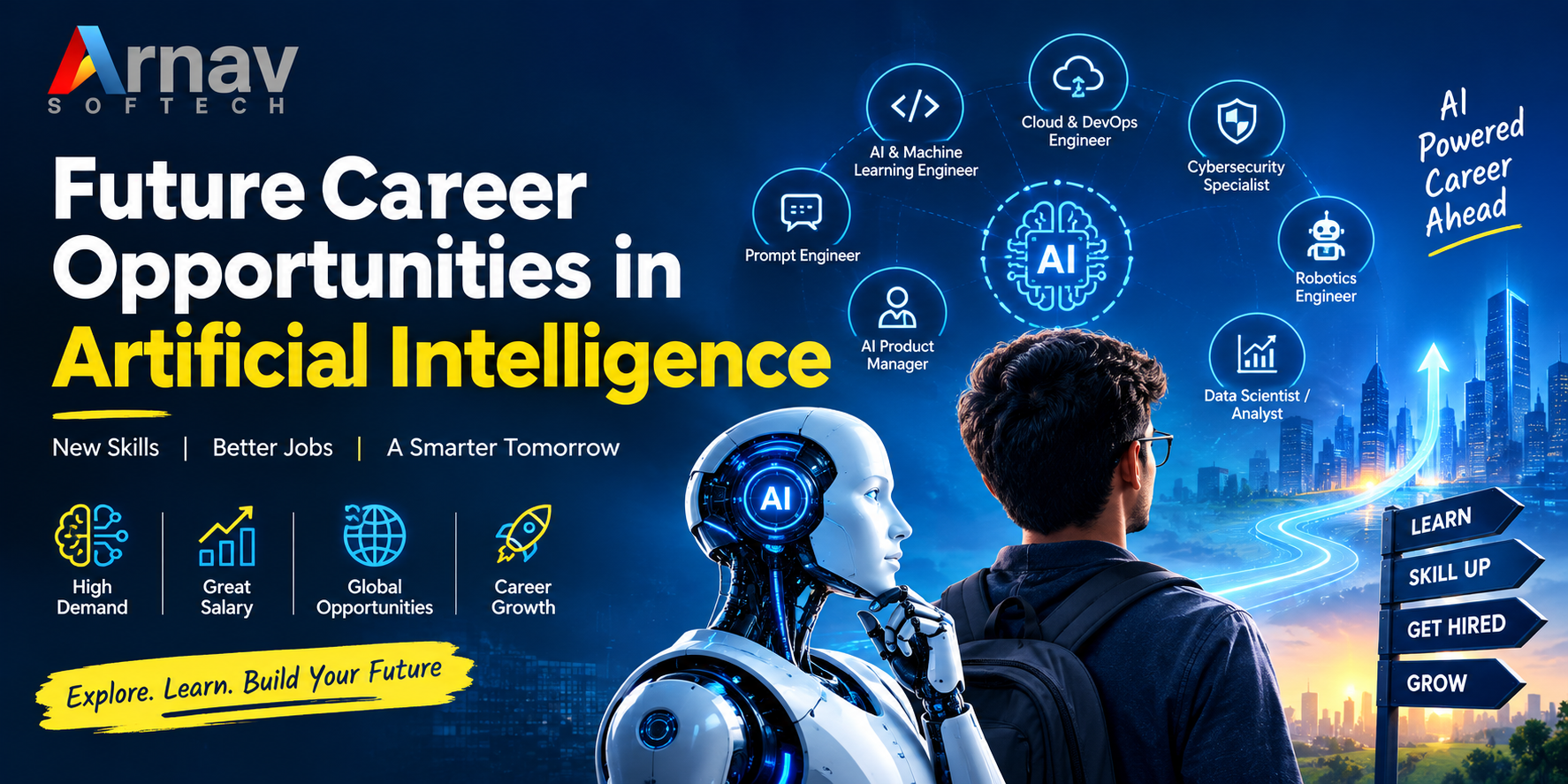
These days almost every student in Ranchi is asking the same question — “Will a job in Artificial Intelligence still be there when I finish my course?” The honest answer is yes, and the demand is only going up. But there is a small catch, and that is what this post is about. Let me explain in simple words, without heavy jargon.
The Real Problem: Too Much AI Talk, Very Few Skilled People
Here is the business problem I see every week. Companies — small shops, hospitals, coaching institutes and startups — want to use AI. They read about it on social media and get excited. But when they actually sit down to build something, they get stuck.
Why? Because they cannot find trained people. At the same time, hundreds of fresh graduates apply for the same job, but most have only watched AI videos. They have never trained a model on real data or cleaned a messy Excel file.
So the gap is not “AI vs jobs”. The gap is AI talk vs AI skill. Companies have money and projects. Students have degrees. But very few can actually deliver.
Why This Matters for You
This matters because AI has stopped being a “big company thing”. Today a small shop can use an AI chatbot to answer customer questions at 11 PM. A clinic can use AI to read X-rays faster. A school can use AI to check answer sheets. These are normal, everyday needs now.
And every one of those needs creates a job — not just for IIT engineers, but for normal trained graduates who understand programming, data and basic machine learning. People who learn AI skills in the next two to three years will have a serious advantage.
Career Paths You Can Actually Aim For
Here are the main career options in the AI field. These are real job roles you can target, not vague titles.
- AI / ML Engineer — Builds and trains machine learning models. Needs Python, maths basics and libraries like PyTorch.
- Data Analyst / Data Scientist — Works with company data, finds useful patterns and gives reports.
- AI Chatbot & Automation Developer — Builds chatbots and workflow automation using tools and APIs.
- Computer Vision Engineer — Works on image and video based AI like face detection and medical imaging.
- NLP Engineer — Deals with text and language. The fastest growing area because of AI chat tools.
- AI Prompt Engineer — The newest role. You guide AI tools to give correct output and fit them into products.
Comparing the Main Options
If you are confused about where to start, this table will help. Pick the path that matches your comfort level, not just the salary.
My honest suggestion: don’t jump straight to the hardest one. A strong foundation in one area is worth more than half knowledge in five.
A Real Example from Our Own Work
At Arnav Softech, we worked with a local business that used to get hundreds of customer enquiries on WhatsApp daily. One person was only replying to the same ten questions again and again.
We built a simple AI assistant trained on their product list and common questions. It handled around 70 percent of the routine queries on its own. The team got free time for real customers and the response speed improved a lot.
Now think — a project like this needed a person who knew:
- Basic Python or JavaScript
- How to use an AI API
- How to connect it with a database and website
That is it. No PhD was required. This is exactly the kind of job skill in demand right now, and it is not going away.
Best Practices I Would Recommend
After training many students and working on real projects, these are the habits that actually help:
- Learn programming first. Python is the best starting point for AI. Don’t skip this and jump to tools.
- Build small projects. A working project on GitHub says more than ten certificates on your resume.
- Understand the data. AI is mostly data cleaning. Learn Excel, SQL and Pandas properly.
- Use AI tools daily. Get comfortable with AI coding assistants, because companies expect it now.
- Follow one path deeply. Choose data, NLP or vision and go deep instead of touching everything lightly.
- Keep learning. AI changes every few months, so practice should be a regular habit.
A Simple Roadmap for Students
If you are a student reading this, here is a practical route:
- Step 1: Learn one programming language (Python or Java).
- Step 2: Get good with Excel, SQL and basic statistics.
- Step 3: Learn data analysis using Python (Pandas, NumPy, charts).
- Step 4: Learn machine learning basics and build two or three mini projects.
- Step 5: Work on one live project or internship for real experience.
- Step 6: Prepare your portfolio, GitHub and start applying.
This roadmap takes eight to twelve months of honest practice. Do it part-time with your studies and you will already be ahead of most freshers when you graduate.
Final Words
Artificial Intelligence is not going to remove all jobs. It will remove jobs that were only about repetitive work, and create many new ones for people who understand how to use it. The opportunity is real, the timing is right, and the only thing between you and that job is proper training and practice. You do not need to be a genius — just start properly and stay consistent.
Ready to Build Your AI Career?
Join our practical, job-oriented courses at Arnav Softech, Ranchi. Learn Python, Data Structures, Web Development and more with live projects and guidance from senior developers.
Explore Our Courses & Batches →
Online & Offline batches available | Enroll today and start your journey