
Picture this: It is a busy Tuesday morning. You have just finished showing a property, your phone is buzzing with three new text messages, two missed calls, and a notification that a new lead just came in from your website. You jot the new lead’s name on a sticky note attached to your dashboard, promising yourself you will call them when you get back to the office.
But by the time you sit down at your desk, you are caught up in a fire drill regarding a delayed appraisal, and that sticky note? It gets lost in the shuffle. Three days later, you finally reach out, only to hear, “Oh, thanks, but we actually just signed a contract with another agent.”
If this scenario makes your stomach drop, you are not alone. In the fast-paced world of real estate, managing relationships, follow-ups, and transactions without a proper system is like trying to catch rain with a sieve.
The Business Problem: The Leaky Sales Pipeline
The core problem facing many independent real estate agents and growing brokerages is lead leakage. Real estate professionals are incredibly adept at generating leads—spending thousands on Zillow, Google Ads, social media marketing, and open houses. However, they often fail at the most crucial step: consistent, structured follow-up.
When leads come from a dozen different sources, relying on memory, yellow notepads, or a chaotic Excel spreadsheet simply does not scale. You end up with a disorganized sales pipeline where high-intent buyers slip through the cracks, past clients are forgotten, and agents spend more time doing administrative data entry than actually selling homes.
Why It Matters: The High Cost of Slow Responses
Why does a disorganized pipeline matter so much? Because in real estate, speed and relationship nurturing are everything.
According to industry studies, the odds of qualifying a lead drop dramatically if you wait longer than five minutes to respond to an initial inquiry. Real estate is a high-ticket, high-emotion industry. Buyers and sellers want an agent who is responsive, attentive, and professional. If your follow-up is erratic, prospects assume your transaction management will be erratic, too.
Furthermore, acquiring a new lead is expensive. If you are paying $20 to $100 per lead, letting them go cold because you forgot to send a follow-up email is literally burning money. You aren’t just losing the initial commission; you are losing the lifetime value of that client and their future referrals.
Presenting Possible Solutions
To fix the leaky pipeline, brokerages generally look at three potential solutions to manage their contacts and sales processes.
- The Status Quo (Spreadsheets & Sticky Notes): Using Microsoft Excel or Google Sheets to manually log leads, update their status, and set calendar reminders.
- A Generic CRM: Platforms like standard Salesforce, HubSpot, or Zoho. These are powerful, flexible Customer Relationship Management tools used by a variety of industries.
- An Industry-Specific Real Estate CRM: Platforms like Follow Up Boss, KVCore, or BoomTown, which are built from the ground up specifically for real estate workflows.
Comparing Your Options
Let’s look at how these options stack up against each other:
| Solution | Pros | Cons | Best For |
|---|---|---|---|
| Spreadsheets | Free, easy to understand, no training required. | No automation, highly prone to human error, no integration with email or IDX. | Part-time agents managing less than 5 clients a year. |
| Generic CRMs | Highly customizable, great integrations, powerful reporting. | Requires heavy configuration to fit real estate terminology and workflows. | Massive brokerages with dedicated IT teams. |
| Real Estate CRMs | Built-in IDX website integration, automated property alerts, real-estate specific drip campaigns. | Can be pricey; migrating old data into the system takes initial effort. | Serious agents and teams looking to scale revenue efficiently. |
Best Practices: How a CRM Actually Increases Sales
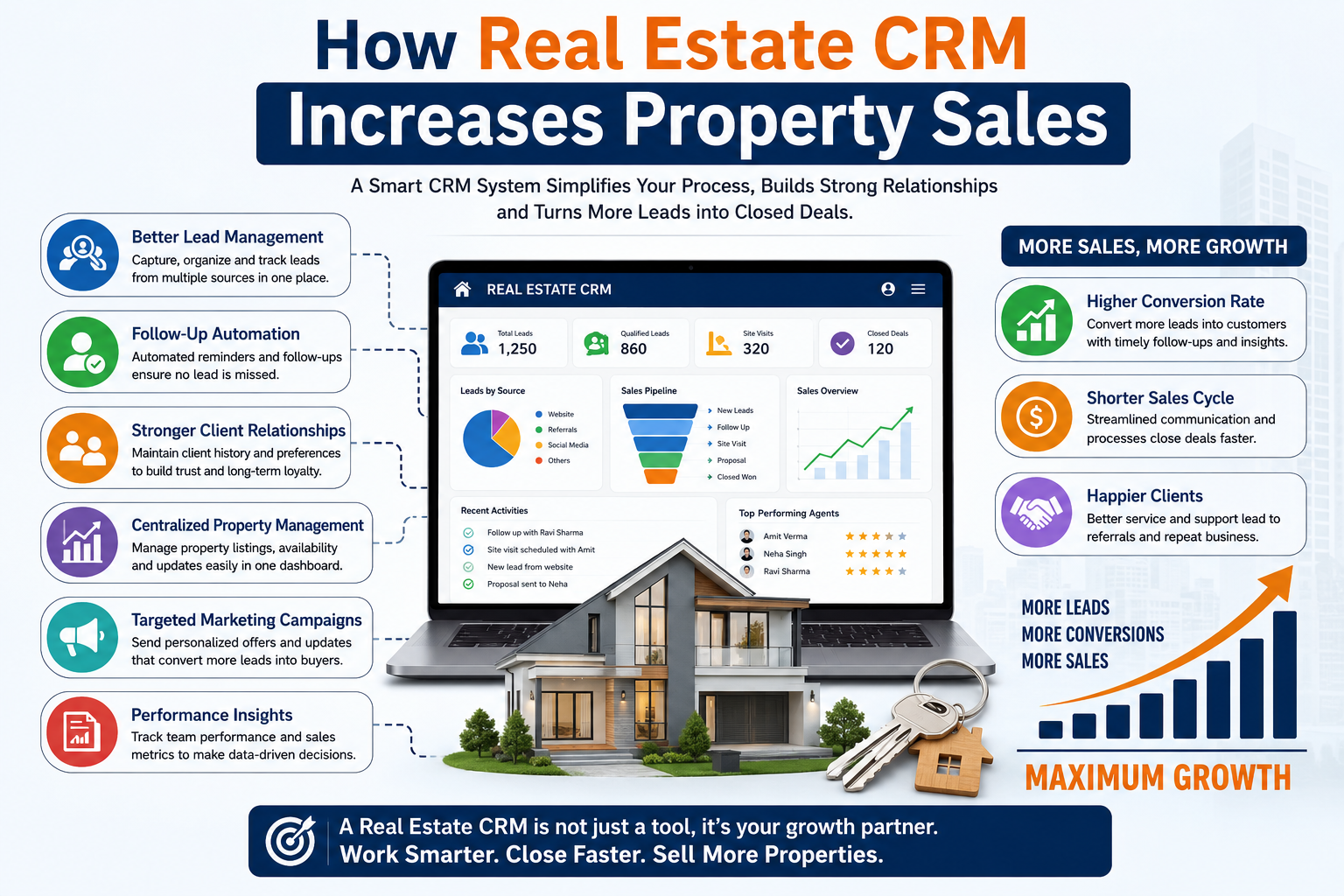
Implementing a CRM is not a magic bullet. The software only works if you use it correctly. To truly increase your property sales, you must leverage the CRM to do the heavy lifting for you. Here are the best practices for getting the most out of your system:
- Automate Your “Speed to Lead”: Set up automated text and email responders. If a lead inquires about a property at 2:00 AM, your CRM should instantly text back: “Hi [Name], thanks for asking about 123 Main St! I’ll check the showing schedule first thing in the morning. Are you looking to move quickly?” This immediate engagement stops them from clicking on to the next agent.
- Segment Your Database: Stop blasting the same newsletter to everyone. A good CRM allows you to tag contacts. Tag them as “Hot Buyer,” “Future Seller (1-2 years),” or “Past Client.” Send targeted content based on their specific journey.
- Use Automated Drip Campaigns for Long-Term Nurture: Most leads aren’t ready to buy today. They might be 6 to 12 months out. Put them on a long-term educational email sequence (a “drip campaign”) that provides value over time. When they are finally ready to buy, your name will be the first one they think of.
- Track Pipeline Visibility: Use the CRM dashboard to visualize where money is sitting. Knowing exactly how many clients are in the “Active Showing” phase versus the “Under Contract” phase allows you to accurately predict your income and know where to focus your daily energy.
Real-World Example: Elevate Realty’s Turnaround
Case Study: Closing the Gaps
Consider “Elevate Realty,” a mid-sized team of five agents. Two years ago, they were spending $3,000 a month on lead generation portals but converting less than 2% of those leads. Agents were cherry-picking the “easy” leads and ignoring the ones that didn’t answer the first phone call.
They decided to implement a dedicated Real Estate CRM. They set up a system where every new lead was automatically assigned to an agent round-robin style. If the agent didn’t log an interaction within 15 minutes, the CRM automatically re-routed the lead to the next available agent.
Furthermore, they applied a “10 Days of Pain” automated follow-up protocol (a mix of texts, emails, and call reminders) for every unresponsive lead. The result? Within six months, Elevate Realty’s lead conversion rate jumped from 2% to 5.5%. They didn’t spend a single dollar more on marketing; they simply stopped losing the leads they already paid for. Their overall property sales increased by 38% that year.
Stop Leaving Money on the Table
At the end of the day, real estate is about building relationships and building trust. A CRM doesn’t replace the human element of selling homes; it enhances it. It frees up your mental bandwidth so you can stop worrying about who you need to call, and start focusing on giving incredible service to the person sitting right in front of you.
Transitioning from sticky notes to an automated machine can feel daunting, but the return on investment is undeniable. You will close more deals, save hours of administrative frustration, and finally build a predictable, scalable real estate business.
Ready to Transform Your Sales Pipeline?
Stop losing leads to disorganized follow-ups. Let our experts help you select, configure, and launch the perfect CRM for your real estate business.